
maria sibylla merian centre
conviviality-inequality in latin america
maria sibylla merian centre
conviviality-inequality in latin america
The Ibero-Amerikanisches Institut Editorial Team
The Institute of Brazilian Studies at the University of São Paulo (IEB/USP) is an interdisciplinary research center dedicated to the preservation, dissemination, and study of a collection of recognized academic relevance, consisting of personal collections distributed among the Archive, Library, and Visual Arts Collection.
Its Library houses one of the most significant Brasiliana collections in the country, with approximately 270,000 volumes organized into 47 collections. Linked to the Institute’s other collections, the Library facilitates the production of qualified research and critical reflection on Brazil, while also promoting academic exchange with similar institutions, both nationally and internationally.
The Institute of Brazilian Studies at the University of São Paulo (IEB/USP) was created in 1962 on the initiative of historian Sérgio Buarque de Holanda. Since then, it has served as an integrating body for one of the largest and most prestigious universities in the country and as an interdisciplinary research center focused on critical reflection on Brazil. Since its inception, the Institute has been structured around the articulation between the Archive, Library, and Visual Arts Collection, bringing together under its care documentary collections that dialogue with multiple areas of knowledge, such as Anthropology, Architecture, Fine Arts, Library Science, Political Science, Cinema, Law, Economics, Education, Philosophy, Geography, History, Literature, Music, Sociology, Museology, and Theater.
The IEB is thus responsible for the preservation, dissemination, and research of an exceptional collection, consisting mainly of personal archives and collections assembled during their lifetimes by prominent Brazilian intellectuals, writers, and artists. These collections reflect comprehensive and dense analytical perspectives on the country’s social, cultural, and artistic thought, making them fundamental primary sources for academic research. In this sense, it is part of the IEB’s institutional mission to promote qualified access to this heritage, as well as to encourage its critical appropriation by professors, researchers, undergraduate and graduate students, both from USP and other national and international institutions, expanding the possibilities for teaching, research, and university extension.
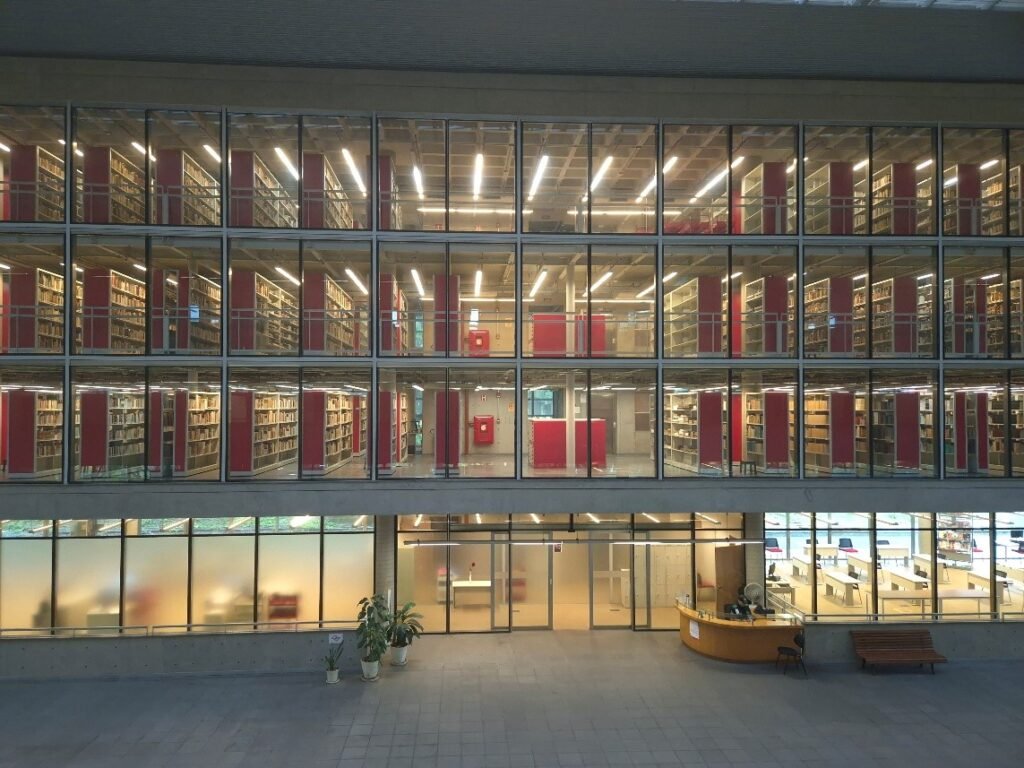
Library of the Institute of Brazilian Studies at the University of São Paulo (IEB/USP)
The IEB Library plays a central role in this complex, constituting one of the main centers for research in Brazilian Studies in the country. With one of the most important collections of Brazilian literature in Brazil, the Library has around 270,000 volumes distributed across 47 collections, associated with key figures in Brazilian culture and thought, such as Mário de Andrade, Caio Prado Jr., Graciliano Ramos, Celso Furtado, Guimarães Rosa, José Aderaldo Castello, and Manuel Correia de Andrade, among others. Its collection also includes the oldest incunabulum in the custody of the University of São Paulo, dating from 1493, as well as rare collections of sermons from the 16th and 17th centuries, travel accounts from the 18th and 19th centuries, and a significant collection of periodicals from the late 19th and early 20th centuries.
Organically integrated with the Visual Arts Archive and Collection, the IEB Library not only preserves and organizes knowledge, but also acts as an active agent in intellectual production, enabling interdisciplinary research, fostering academic exchange, and contributing to the development of innovative research tools. The close relationship between the collection and scientific research thus constitutes a vector of institutional innovation, incorporating both established fields—such as Archival Science and Museology—and emerging approaches, such as Digital Humanities.
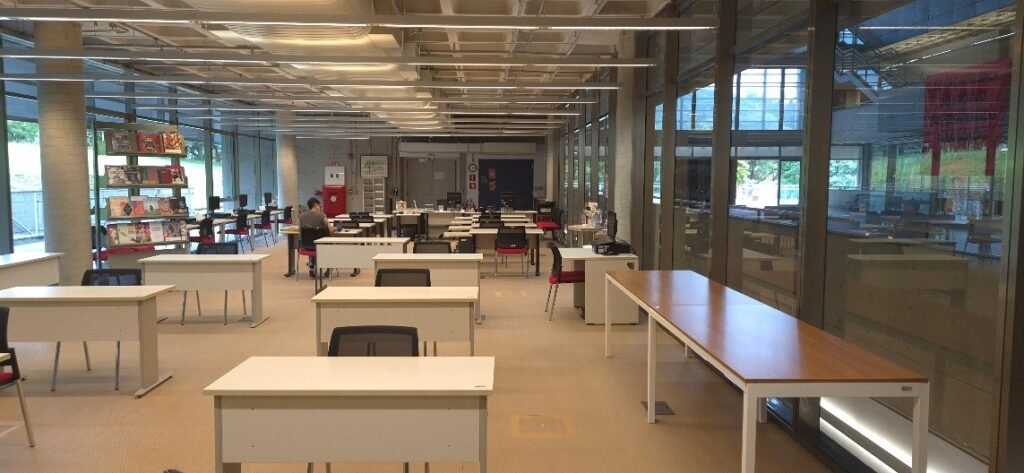
True to its mission, the IEB reaffirms values such as the protection of cultural heritage, the democratization of information and knowledge, freedom of thought and expression, diversity and social inclusion, and an ongoing commitment to dialogue with society. Supported by a monumental collection and consolidated interdisciplinary practices, the Institute stands out as a national and international reference in Brazilian Studies, contributing decisively to critical reflection on Brazil and to addressing the educational, economic, and social inequalities that mark the country’s reality.